MAGAZINE SECTION
Training & Technique
Senior Golf Training Reimagined: Save more strokes in 30 minutes of range time than with three pro lessons. Interleaved practice, mechanics over power, SuperSpeed sticks, and sigma consistency instead of distance chasing. Data-driven, evidence-based, without marketing promises.
Why 30 minutes of proper practice is more beneficial than three hours on the range
Most senior golfers come to the range with the feeling that „beating balls” is the same as training. That is precisely the most expensive mistake: Blocked repetition – 50 balls with a 7-iron in a row – feels like practicing, but motor learning occurs through alternation. Studies from motor learning (Schmidt, Lee) clearly show: Interleaved practice with three clubs in a 5-ball rotation beats block practice by a factor of 2 in score-relevant transfer performance – meaning what actually happens on the course.
In this section, you will find evidence-based concepts for senior golf training: interleaved practice sequences., SuperSpeedStick protocols without added weights, sigma consistency drills instead of distance maximums, wedge distance calibration 30–80 m, lag putt schemes of 6/9/12 m, and pre-shot routines that hold up under pressure. Sources include motor learning research., TrackMan-Data and own training logs.
No Tour pro tips designed for 105 mph swing speeds—but training levers for 75–90 mph that you can implement starting at your next range session.
The Four Critical Levers in Senior Golf Training
Interleaved Practice instead of 50-ball block
Block repetition (50x 7-iron in a row) feels like practice, but it's the most expensive senior range mistake. Schmidt and Lee motor skill studies show: Interleaved practice—alternating three clubs—outperforms block practice in transfer performance by a factor of two. Specifically: 5x 7-iron, 5x 52-degree wedge, 5x hybrid, then repeat. What looks more boring here pays off on the course.
2. Sigma-consistency before distance-maximum
A senior golfer with a 75-mph driver speed doesn’t win by adding 5 mph, but by halving his σ dispersion. TrackMan data shows that halving σ with the driver equates to about 2.5 strokes gained per round—more than any gain in distance. Better to have 80% % consistency at 75 mph than to attempt 95 mph drives with the risk of a slice.
3. SuperSpeed Sticks: +5–8 % swing speed in 6 weeks
The Senior SuperSpeed Protocol (three sticks: yellow/blue/red) delivers a consistent increase of +5–8 % driver speed after six weeks of three sessions per week. Important for seniors: no additional weights, only Levels 1 and 2. Mechanics remain clean, injury risk is minimal—and the speed gain directly translates to carry distance.
4. Wedge Distance Calibration 30–80 m
Senior Strokes Gained analyses show: the 30-80m zone is statistically the biggest score killer. Three wedges, each with three carry distances (e.g., PW: 70/85/100 yards), ten repetitions per distance, measure with carry markers, and record in your training logbook. What you can't measure, you can't lower — and without wedge control, every approach remains a gamble.
Frequently Asked Questions about Senior Golf Training
How many training sessions per week are sensible?
Three units plus a round deliver the best score effect in senior age. More is not better — recovery is part of the methodology. A range session for sigma consistency, a practice green session for putting and wedges, a game session on the course.
SuperSpeed: When is it worth it and how long should you stick with it?
Reasonable from 65 [mph] if the driver speed is below 85 mph. Protocol takes six weeks for a visible effect — then one unit per week to maintain. After a six-week break, measure again to see if gains hold, otherwise re-boost.
Per hour or range time — what yields more score?
A pro lesson costs 50-80 Euros, a range lesson 5-10 Euros. Sensible: 4-6 pro lessons per season as diagnostic anchors, with evidence-based self-training in between. Anyone who just hits balls without pro diagnosis efficiently repeats their mistakes.
How long does it take for a drill to affect the score?
Motor learning takes 4-6 weeks for stabilized movement patterns — longer for senior golfers. Practice for three weeks, test on the course for one week, measure the score effect with Strokes Gained. No evidence-based judgment without measurement.
Below you will find all posts in this category — sorted by recency.
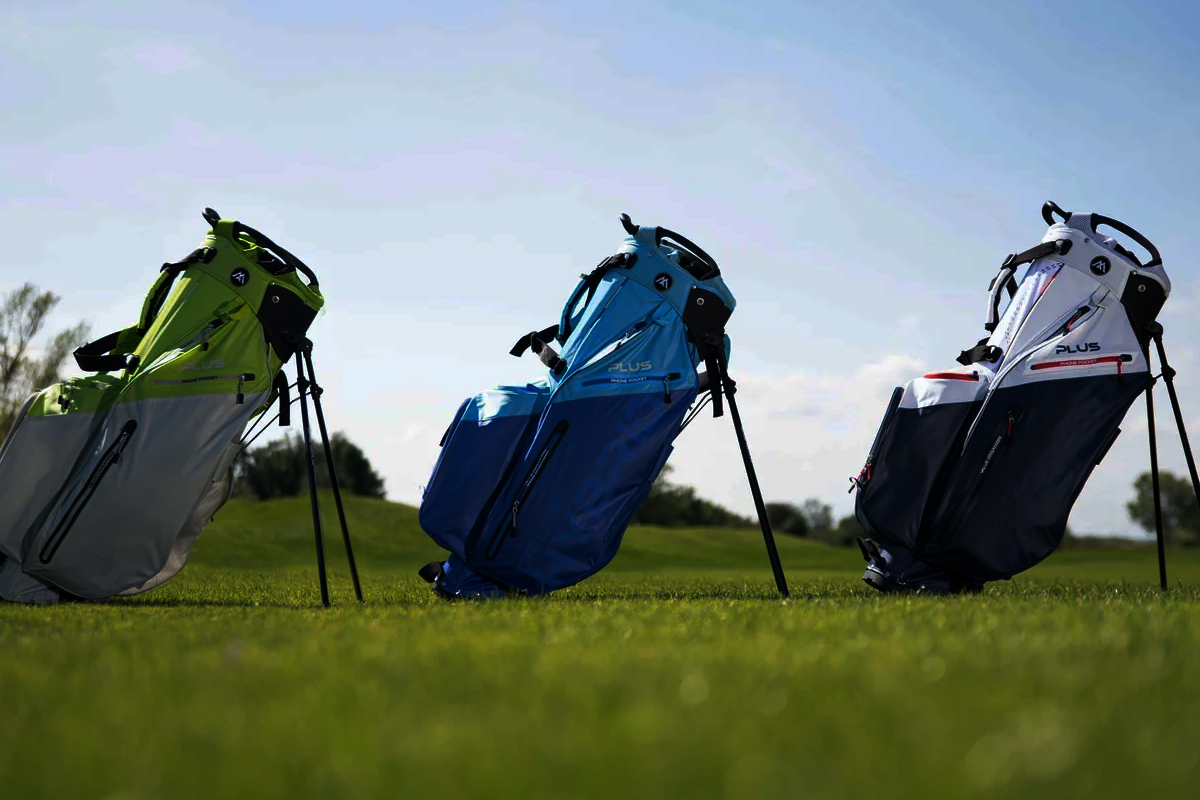
Iron 3 from 60: Why it rarely belongs in the bag
TECHNOLOGY · IRON 3 Iron 3 — why it rarely belongs in the bag after 60. The Iron 3 requires 95 mph clubhead speed to launch cleanly. Senior golfers with lower speeds produce flat trajectories [...]

52° Wedge — the Gap Wedge in the Senior Bag
TECHNIK · 52° WEDGE The 52° wedge — the gap wedge in the senior bag. With a 65-70 m full swing and excellent spin properties, the 52° wedge is the bridge between the PW (or 48°) and the 56° wedge. When a 52° [...]
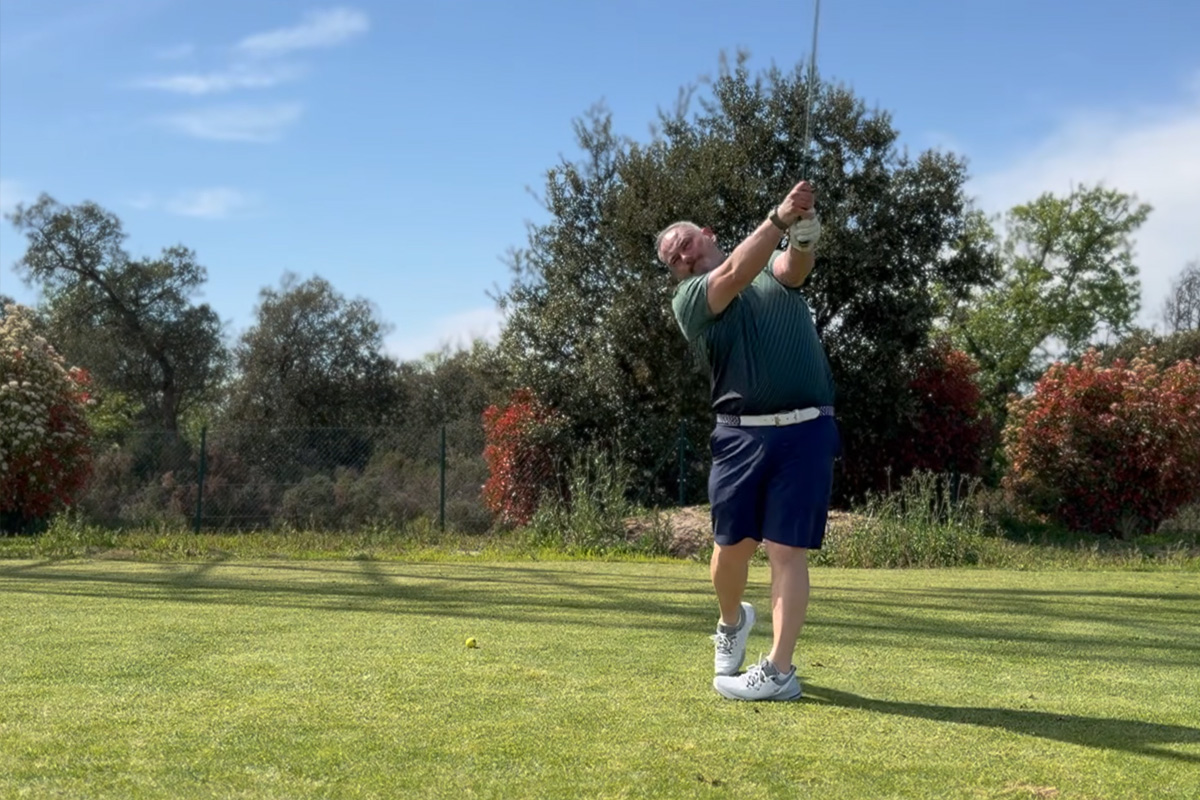
Iron 8 — precise approaches in the 110-130 m zone
TECHNOLOGY · IRONS 8 Iron 8 — Precise Approaches 110–130 m. The Senior Golf Iron 8 with 36° loft produces the highest trajectory among non-wedge irons, resulting in the softest greenside landings. For approaches in [...]

Iron 9 — Transition to the Short Game
TECHNIC · IRON 9 Iron 9 — Transition to the Short Game. The 9 iron, with 40° of loft, is the bridge between approach irons and wedges. 100 m average carry, high trajectory, good for short approach [...]

Pitching Wedge — the 100-Yard Weapon in the Senior Bag
TECHNOLOGY · PITCHING WEDGE The Pitching Wedge - the 100-meter weapon. The PW is the club with the highest score impact per shot in the senior bag. 100m full swing, 70m three-quarter, 50m half-swing. Three [...]

Iron 7 - The Favorite Iron of Senior Golfers
TECHNOLOGY · IRON 7 Iron 7 — The favorite iron of senior golfers. Statistically, the 7-iron is the most frequently played iron club among seniors: 125 m median carry, high greens in regulation (GiR) rate, versatile in many lies. What [...]
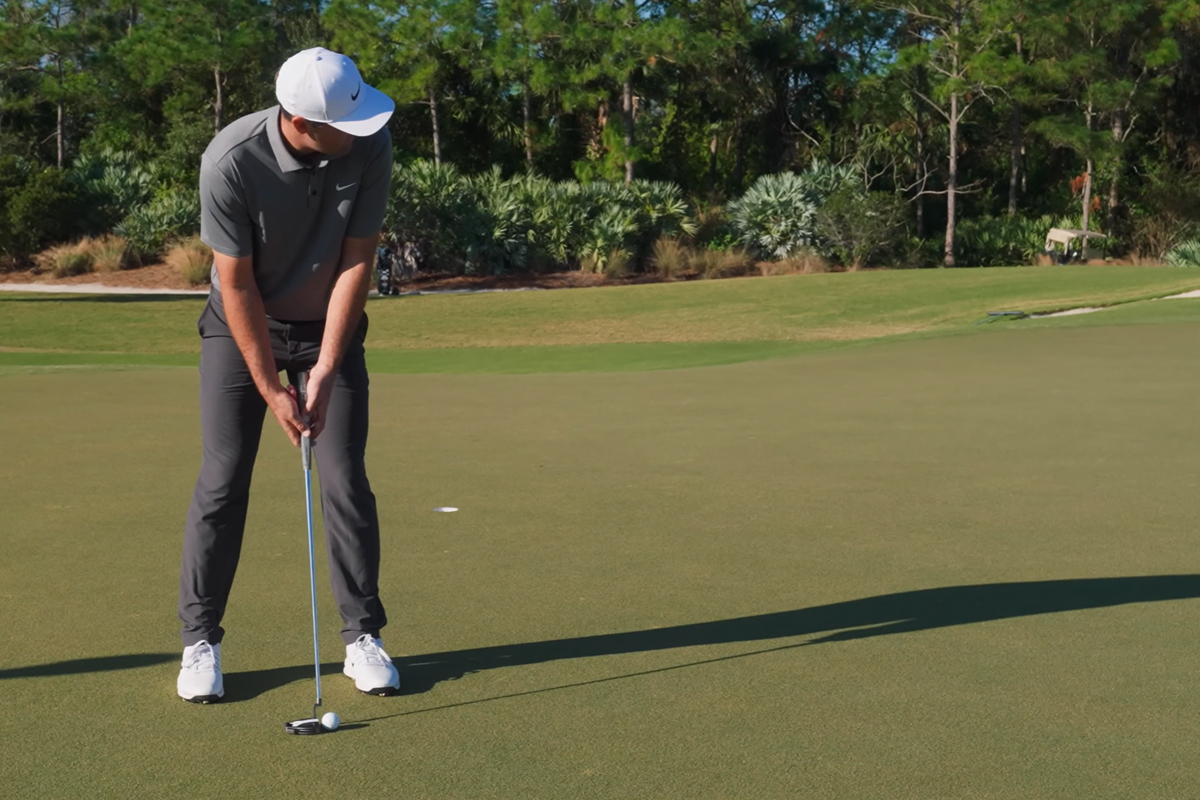
Putter Mechanics from 60 Onwards – Stroke Play as a Senior Advantage
TECHNIK · KRITISCH GEPRÜFT Putter-Mechanik ab 60 — Stroke-Disziplin als Senior-Vorteil. Putten ist die einzige Golf-Disziplin, in der Alter kein Nachteil sein muss. Stabiler Stroke, ruhige Körperhaltung, Erfahrung — biomechanisch spielt der Senior-Vorteil [...]

Follow-Through and Balance — the Mirror of Mechanics
TECHNIQUE · FOLLOW-THROUGH Follow-Through and Balance — the Mirror of Mechanics. The follow-through is the often-neglected endpoint of the senior swing — and at the same time, the most precise diagnostic indicator for swing mechanics. Three follow-through characteristics reveal everything [...]
Sand Wedge — Bunker Mechanics from 60
TECHNOLOGY · SAND WEDGE The Sand Wedge — Bunker Mechanics from 60 Onwards. The bunker shot is often the most feared shot in senior golf — but with the right technique, it becomes a calculable routine. Three mechanical adjustments [...]

Lag and Release Timing - What's Realistic in Senior Years
TECHNIC · LAG Lag and Release Timing - What's Realistic in Senior Age. Tour pros generate massive lag (delayed wrist uncocking) through reflexive stretch-shorten cycles. In senior age, this reflexive elasticity decreases. What realistic lag means in a senior swing [...]
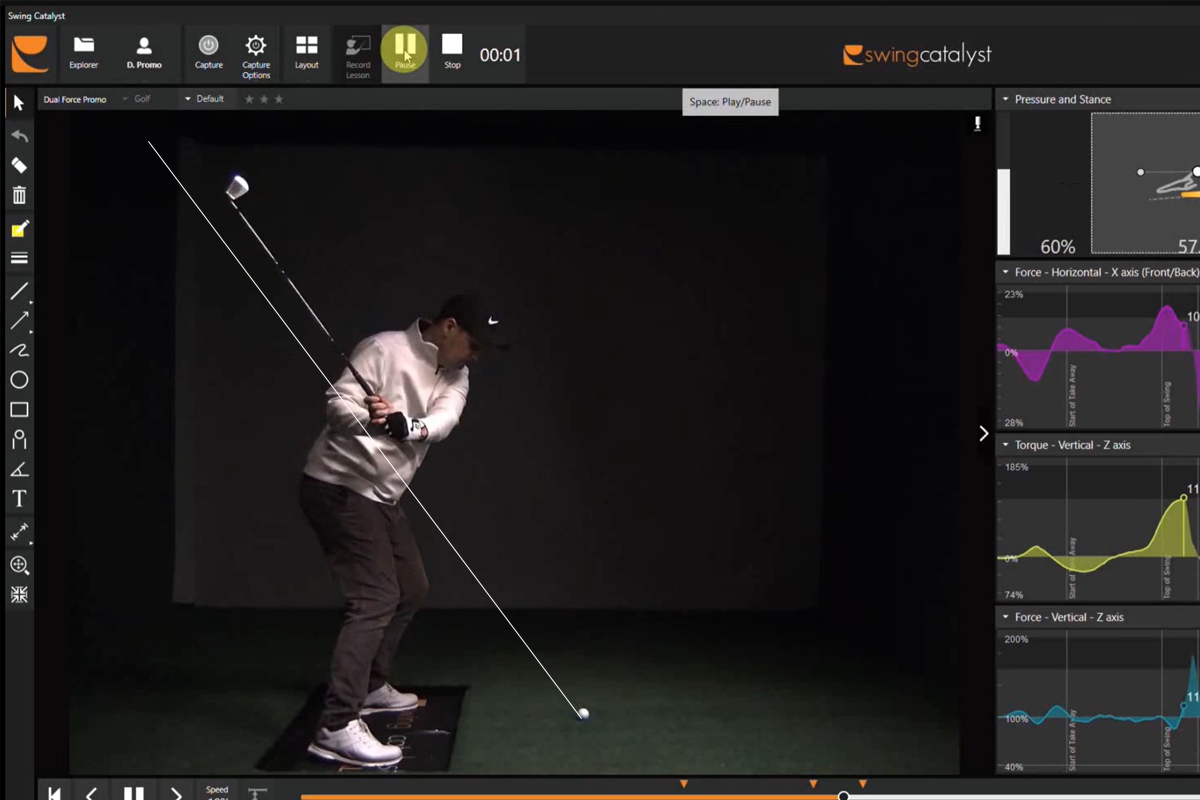
Understanding the Swing Plane — Single vs. Two-Plane
TECHNIC · SWING PLANE Understand the Swing Plane — Single vs. Two-Plane. Single-Plane or Two-Plane Swing — the question that is often not even asked in senior golf. What distinguishes the two concepts, which one for which [...]

Hip rotation from 60 — the most important energy source
KÖRPER · KRITISCH GEPRÜFT Hüft-Rotation ab 60 — die wichtigste Energie-Quelle? Die halbe Golf-Welt schwört auf MyTPI und die „Hip First"-Doktrin. Die andere Hälfte hat vergessen, dass die Hüfte nur ein Zahnrad in [...]
 German
  English