MAGAZINE SECTION
Measuring training effects
Measuring the True Impact of Senior Golf Training: KPIs, Baselines, Strokes Gained, and 6-Week Tracking — How Senior Golfers Can Truly Know if Their Training is Affecting Their Score. Data-Driven, Based on TrackMan and USGA Distance Insights.
Why senior golfers rarely measure their progress — and what they're losing
Most senior golfers practice without objective measurement. They feel that „something could be better” or „today wasn't my day” – but whether practice on the range actually has a score impact on the course remains unclear. Data coaching studies show that senior golfers who systematically measure their training effects improve their handicap by an average of 1.8 points faster from age 60 onwards than those without tracking.
In this section, you will find data-driven methods for measuring the effects of senior golf training: baseline measurement on Day 0, KPI selection based on score leverage, Strokes Gained calculation without an expensive subscription, a 6-week re-test protocol, and wearable strategies for 24/7 data. Sources are TrackManResearch, Arccosine-Aggregation studies and own training logs.
No diagnostic myths, no „believing in feelings” — but measurable levers that make every training day assessable.
The Four Critical Levers for Measuring Senior Golf Training Effectiveness
1. Defining KPIs — which metrics really count
Without a clear selection of KPIs, you’re measuring noise, not impact. For senior golfers, the four core KPIs are: σ consistency with the driver (spread rather than maximum), median carry with a wedge of 30–80 m, greens-in-regulation (GiR) rate per round, and 3-putt rate per 18 holes. More KPIs dilute the signal—fewer aren’t enough to identify trends. Documenting them in a simple Excel column per round is perfectly sufficient.
2. Baseline Measurement — the first day of each program
No baseline, no comparison. Before every training program: 30 driver shots for σ, 30 wedges (3×10 for the three distances 30/55/80 m), 30 putts (3×10 distances 3/6/9 m) on the practice green. Record the date and scores. These 90 strokes serve as the benchmark against which all future retests will be measured. For seniors specifically: on the day of practice in a stress-free environment, not after playing 18 holes.
3. Calculate Strokes Gained Yourself — Visualize the Impact on Your Score
Strokes Gained is the only metric that directly impacts your score—all others are indicators. You don’t need a TrackMan subscription: a simple Excel template (hole number, distance, actual strokes, target strokes from the PGA benchmark) is all you need. Calculate SG-Driver, SG-Approach, SG-Short Game, and SG-Putting per round. This will show you where you’re really losing strokes—and where practice actually makes a difference.
4. 6-Week Retest — When Is an Effect Statistically Significant?
Motor learning takes 4–6 weeks to establish stable movement patterns. Only then is a follow-up test meaningful. Important: identical test conditions (range, weather, time of day), identical data points (30 drivers, 30 wedges, 30 putts), and a comparison of medians (not best-of-3). An improvement of less than 5 % may be coincidental—an improvement of more than 10 % is statistically significant.
Frequently Asked Questions about Measuring the Effects of Senior Golf Training
How many data points are needed for a reliable result?
At least 30 swings per KPI. If you’re below 20, the variation in your variation is too high. Above 50, you’re wasting time on the range without gaining any additional insight. 30 is the sweet spot between statistical significance and the effort required in practice.
What tools do I really need?
Basic: Excel or Notion plus a carry marker on the range. Advanced: a wearable like Arccos or Shot Scope (200–300 euros, automatically calibrated for one year). Premium: an occasional launch monitor session (50–80 euros). You do NOT need all three—one is enough.
Why the median instead of the best value?
Your best score measures your potential; your median score measures your reality. On the course, you don’t play your best score—you play the average of your swings. Senior golfers who focus on their best score systematically overestimate their distances and choose the wrong clubs. The median is the only metric that matters for your score.
When is an increase in swing speed statistically significant?
An increase of more than 5 % in median speed with at least 20 repetitions is statistically significant. Anything below 5 % may be due to daily form. After six weeks, SuperSpeed training typically yields 5–8 %—making it clearly measurable. Without median speed and rep count, any „+10 mph” anecdote is worthless.
Below you will find all posts in this category — sorted by recency.

KPIs for Senior Golf — Which Metrics Really Count
STATISTICS · KPIs KPIs for Senior Golf — Which Metrics Really Matter. Strokes Gained, GiR Rate, Putts per Hole, Up-and-Down Rate, Median Driver Carry, Wedge Distances — many metrics, few truly relevant. Which six KPIs influence the senior score on [...]

Median over Best — the most important data rule
MESSEN · DATA RULE The Median: The most important data rule from age 60. Senior golfers store the best shot of the season and plan with it. This systematically leads to approach shots that land short. The most important senior data rule is simple: [...]

Measuring Training Effects — What Does That Mean in Senior Golf?
MEASUREMENT · METHODOLOGY Measuring the Effects of Training — What Does That Mean in Senior Golf? „I practice a lot" isn’t enough in senior golf. What does it mean to truly measure the effects of training — and which three dimensions determine whether [...]

Golf Baseline Measurement — The First Day of Every Training Program
MEASUREMENT · BASELINE GOLF GOLF Baseline measurement — the first day of every training program. Without a baseline, there is no measurable progress. The first measurement session before every training block is the most important — and the most often skipped. What [...]

Calculating Strokes Gained Yourself — Understanding the Score Lever
MEASUREMENTS · STROKES GAINED Calculate Strokes Gained yourself — understand the score lever. Strokes Gained is the most advanced method of score analysis. What it tells you, how to calculate it yourself, and which three senior score levers it reveals [...]

Swing Analysis Apps — V1, Hudl, Onform Compared
SWING ANALYSIS APPS — V1, Hudl, Onform Compared. Smartphone apps for swing analysis have improved enormously: slow-motion video, drawing lines, comparing with tour pros. Three apps dominate: V1 Golf, Hudl Technique, Onform. Which one fits [...]

Wearables in Senior Golf — Arccos, Shot Scope, Garmin
EXHIBITIONS · WEARABLES Wearables in Senior Golf — Arccos, Shot Scope, Garmin. Wearables automatically track club selection, distance, and score variation. Arccos (club sensors), Shot Scope (watch sensor), Garmin Approach (GPS watch). Three systems dominate the senior wearables segment. [...]
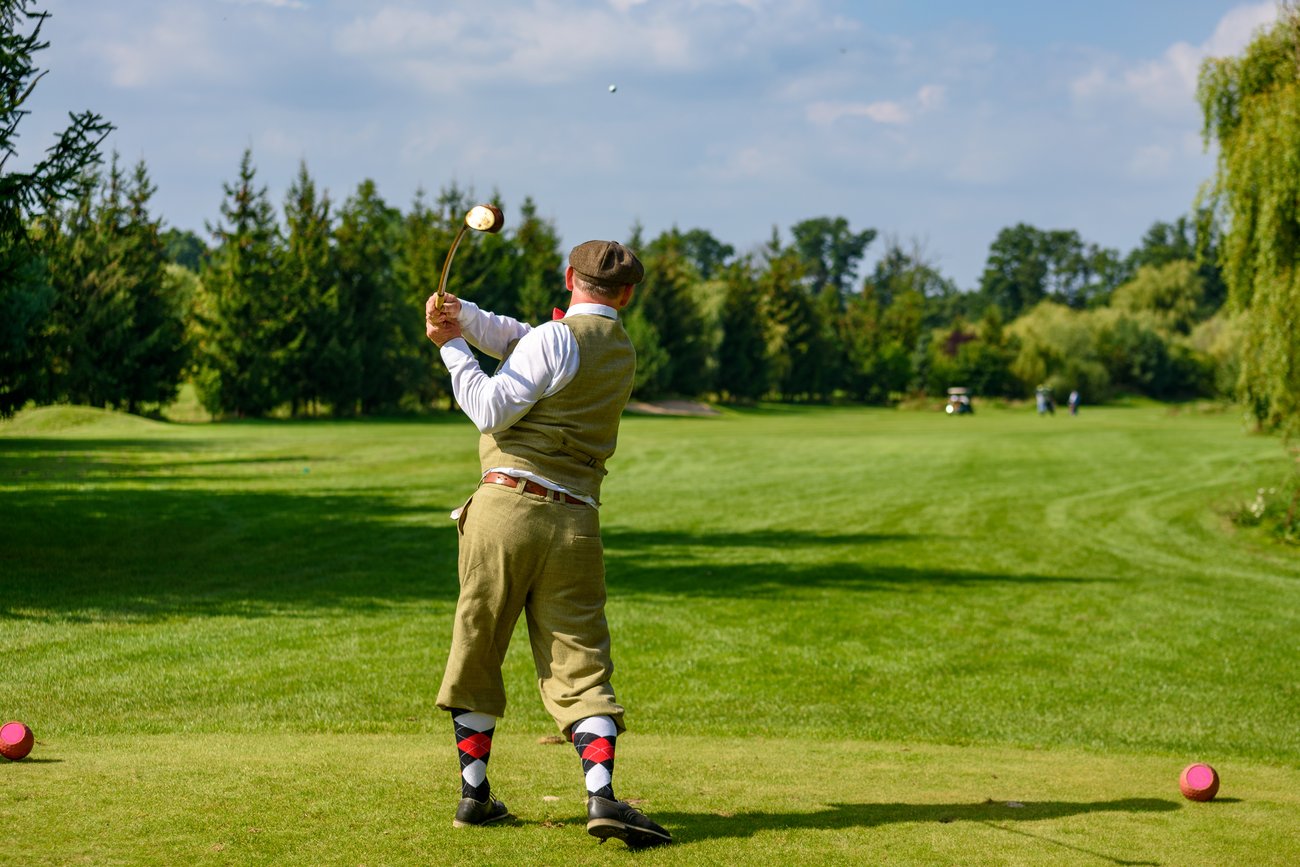
Launch Monitors at Home — Five Options Starting from 200 Euros
MESSEN · LAUNCH MONITOR Launch Monitors at Home — Five Options Starting at 200 Euros. Personal Launch Monitors Starting at 200 Euros Instead of a PGA Pro for 100 Euros Per Hour. What the Five Most Important Senior Options Offer, Which [...]

TrackMan, Foresight, FlightScope — the professional comparison
MEASUREMENTS · PROFESSIONAL LAUNCH MONITORS TrackMan, Foresight, FlightScope — a comparison of professional models. Three professional launch monitor brands compete globally: TrackMan (Doppler radar), Foresight (photometric), FlightScope (hybrid). Which one is right for which senior golfer—and when is a professional-level system even worth it? [...]

Putters – Sensors — SAM PuttLab, QuintIC, and Smart Putters
MEASUREMENTS · PUTTING SENSORS Putting sensors — SAM PuttLab, QuintIC, and smart putters. Putting sensors measure stroke path, face angle, tempo, and impact position. Three professional systems dominate the market: SAM PuttLab, QuintIC, and smart putters (Arccos, putter grips with sensors). What they [...]

Understanding Bebrassie Data — The Senior Data Hub
EXHIBITIONS · BEBRASSIE Understanding Bebrassie Data — the Senior Data Hub. Bebrassie is the leading golf tracking app in German-speaking countries. Strokes Gained, GiR, FiR, putting statistics—all senior-relevant KPIs in one tool. How senior players can properly interpret Bebrassie data [...]
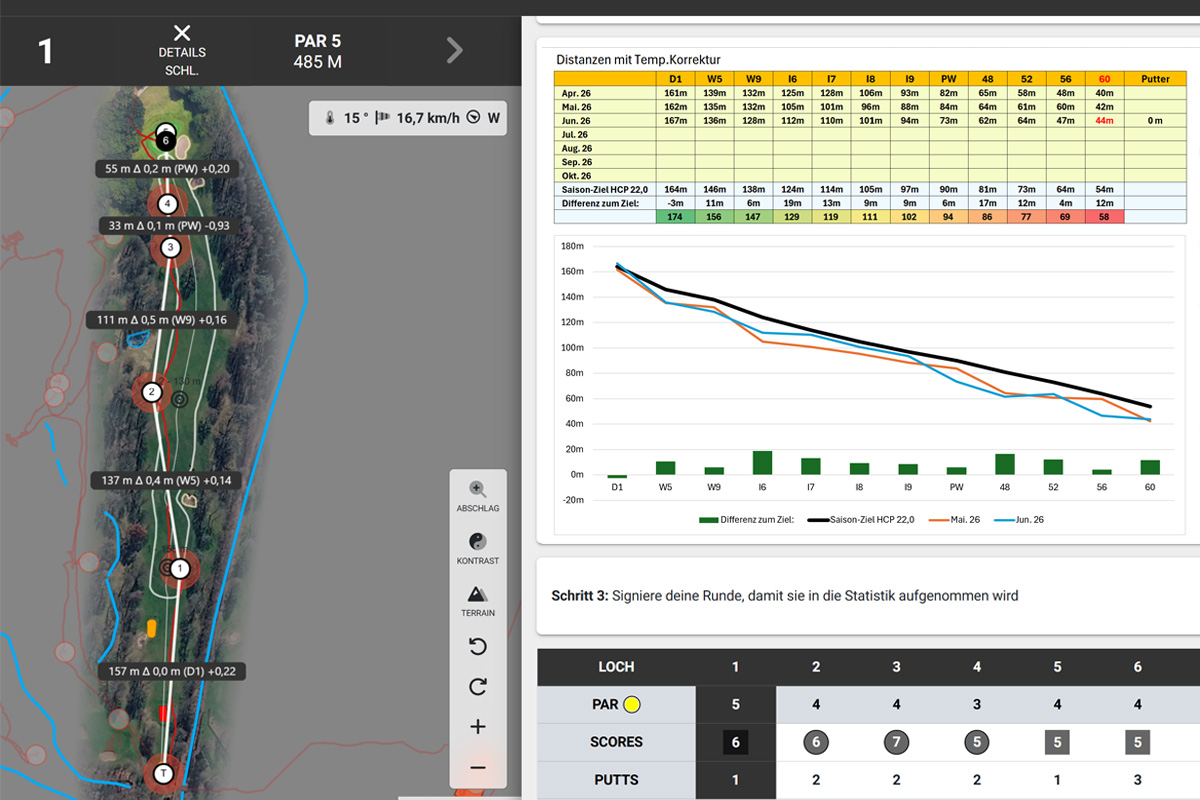
Data points and statistical significance in senior golf
MESSAGE · CRITICALLY EXAMINED Data points and significance in senior golf. A good range session is not training progress. Three rounds are not a trend. Ten data points are a reliable rule of thumb — but no more. What [...]
 German
  English