MAGAZINE SECTION
Rules and Handicap
Senior Golf Handicap Management: The World Handicap System 2024, Senior-Specific Rules of Golf, and Concrete Strategies to Maintain or Improve Your Handicap from Age 60. Data-Based According to DGV and USGA.
Why rules and handicaps must be played differently from 60
The handicap system is the invisible pillar of senior golf. It determines which flight you land in, whether you play in team competitions, and how your progress is measured. From age 60, additional aspects come into play: the senior tee regulation, the World Handicap System 2024, playing handicaps per tee box, and new course rating standards.
In this section, you'll find data-driven articles on all aspects of senior golf handicaps, from the right tee to four concrete levers that measurably save strokes starting at age 60. Sources include the DGV-Member Statistics 2024 USGA World Handicap System and Strokes-Gained analytics.
No marketing myths, no tour pro tips that don't work in your senior years – but concrete rule and strategy levers for your next handicap-qualifying round.
The Four Critical Levers for Senior Golf Handicap
Senior Tee Strategy - 200m shorter saves 2-3 strokes
At a driver speed of 75 mph, the senior or ladies„ tees (from 65 onwards) are mathematically the smarter choice. Course rating mathematics shows that 200 meters less distance on average corresponds to 2.5 shots better gross score. The pride of ”playing from the yellow tees" costs 5-8 handicap points per season. When to switch? As soon as your driver carry is under 200 meters – no exceptions.
2. EDS Strategy – Aiming for 8 to 12 rounds per season
EDS (Extra Day Score) rounds are the most important handicap lever—when used correctly. Best practice: 8–12 handicap-qualifying rounds per season, at least half of which on a familiar home course. Inform markers, score honestly, and consider slope and course rating. More than 15 EDS per year blurs the handicap signal—fewer than 6 systematically underhandicaps you.
3. WHS Optimization - Best 8 out of 10 rounds count
The World Handicap System 2024 calculates the handicap from the best 8 of the last 20 handicap-eligible rounds. Specifically: pushing a weak round out of the pool, catching up three stable good rounds – the handicap drops by 1.5–2.5 points. Important: check the Course Rating and Slope of the tees played, as they critically scale the gross score in the handicap calculation.
4. Pace of Play — 4 hours for 18 holes as a target marker
Senior players are often perceived as slow on the course – usually unfairly, but when it does happen, it costs mental points for your own round. Rule of thumb: a maximum of 4 hours for 18 holes, a clear pre-shot routine (max. 30 seconds), ball search up to 3 minutes (WHS standard, not 5). Ready golf instead of honor – expressly permitted in team play.
Frequently Asked Questions about Senior Golf Handicap
When should I play from the senior tees?
Once the driver carry is under 200 meters or the HCP tendency has been rising for three seasons. The math is clear: shorter is better when swing speed drops below 80 mph. Pride costs measurable HCP points.
How many EDS rounds per season are reasonable?
8-12 handicap-qualifying rounds, spread throughout the season. More dilutes the handicap signal; less is insufficient for a stable WHS calculation. Important: honest scoring, otherwise the index will only reflect one's own wishful thinking.
What happens to my HCP on a bad round?
A single bad round will worsen the handicap index by a maximum of 5 strokes (cap rule in WHS 2024). Outliers on the higher side are weighted less than improvements—the system is designed for consistency.
Senior Tees in a team match — what are the rules?
In DGV team play, the following applies: Age group 65+ may play from shorter tees, and handicaps will be adjusted accordingly. Important: Check before the tournament which tees are currently approved for your own age group – local tournament committee regulations may vary.
Below you will find all posts in this category — sorted by recency.
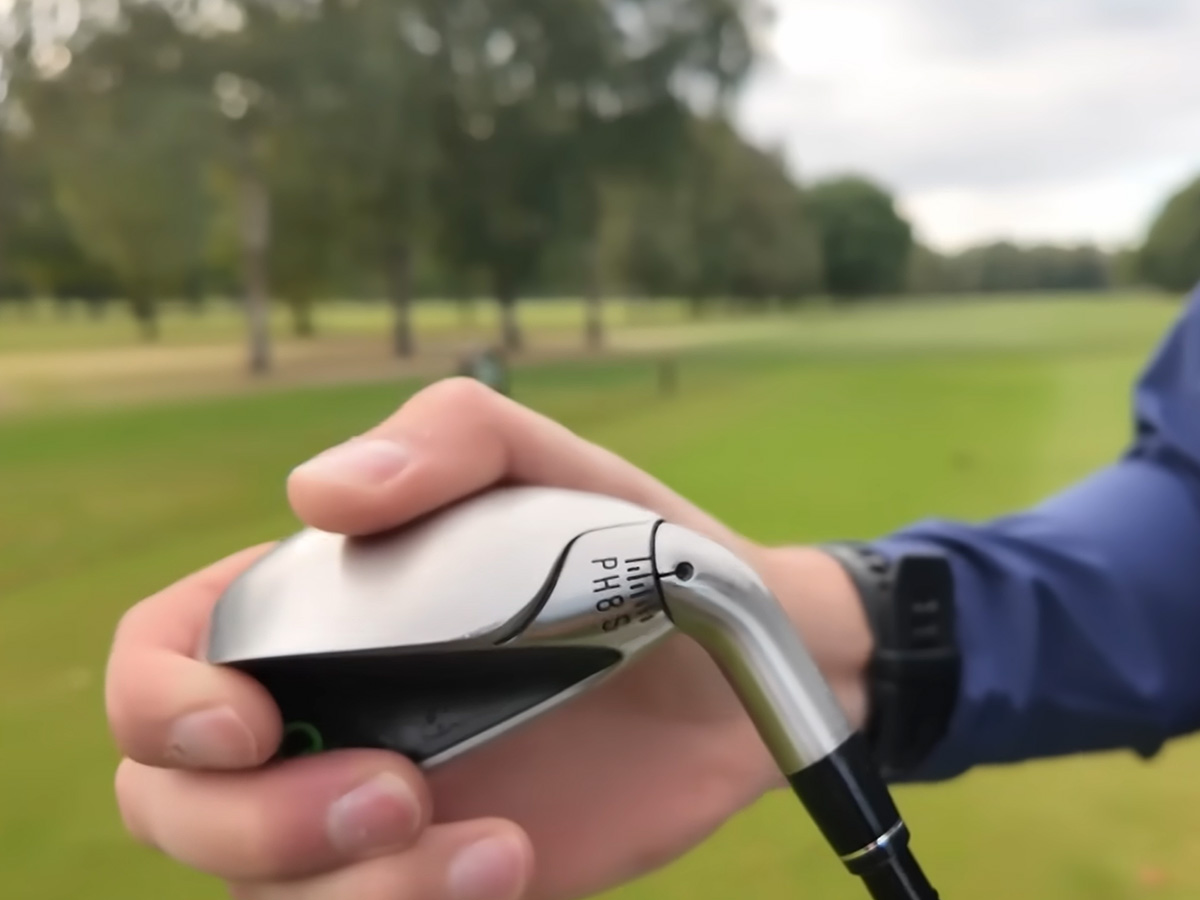
Distance stickers on the racket? What the rules really allow
RULES · EQUIPMENT Distance stickers on the club? What the rules really allow. Anyone who writes loft or swing distance on their club risks immediate disqualification in stroke play. A look at the R&A Equipment Rules — and why the [...]

The 5-wood - the senior all-rounder in the bag
EQUIPMENT · CRITICALLY EVALUATED The 5-wood — the senior all-rounder. The 5-wood is the most versatile fairway club in the senior bag — fairway, semi-rough, long par 3s, par-5 layups. Manufacturers' catalogs are giving it less and less space because hybrids offer more [...]

Iron 4 from 60 — when it still makes sense
TECHNIC · IRON 4 Iron 4 — when it still makes sense at 60+. Iron 4 is the borderline case in the senior bag: playable at 85+ mph clubhead speed, below that it gets difficult. When it stays, when it [...]
Iron 5 — The Distance Wedge in the Senior Bag
TECHNIK · IRON 5 Iron 5 — the distance bridge. The Iron 5 is the most versatile club in the senior bag between woods and short irons. With approximately 145 m of carry, it covers the 140-155 m zone — a [...]

The 7-wood — High launch for 160-180m
TECHNOLOGY · 7 WOOD The 7 Wood — High Launch for 160–180 m. With 21° of loft, the 7 Wood produces the highest trajectory in the wood bag — and thus the softest landing on the green. For senior golfers with lower [...]

Iron 3 from 60: Why it rarely belongs in the bag
TECHNIC · IRON 3 Iron 3 — why it rarely belongs in the bag from age 60 onwards. The Iron 3 requires 95 mph clubhead speed for a clean launch. Senior golfers with lower speeds produce flat trajectories and short carries. What [...]

52° Wedge — the Gap Wedge in the Senior Bag
TECHNOLOGY · 52° WEDGE The 52° wedge — the gap wedge in the senior bag. With a 65-70m full swing and excellent spin properties, the 52° wedge bridges the gap between the PW (or 48°) and the 56° wedge. When a 52° is indispensable and which [...]
Iron 8 — precise approaches in the 110-130 m zone
TECHNOLOGY · IRONS 8 Irons 8 — Precise Approaches 110–130 m. The Senior-Golf Iron 8 with 36° loft produces the highest trajectory among the non-wedge irons — and therefore the softest greenside landings. For approaches in the 110-130 m zone [...]

Iron 9 — Transition to the Short Game
TECHNIK · IRON 9 Iron 9 — Transition to the Short Game. The 9-iron, with 40° loft, bridges the gap between approach irons and wedges. 100 m median carry, high trajectory, good for short approach and long chip shots. Three [...]

Pitching Wedge — the 100-Yard Weapon in the Senior Bag
TECHNOLOGY · PITCHING WEDGE The Pitching Wedge — the 100-meter weapon. The PW is the club with the highest score impact per stroke in the senior bag. 90m full swing, 70m three-quarter, 50m half-swing. Three wedge distances that have the greatest [...]

Iron 7 - The Favorite Iron of Senior Golfers
TECHNOLOGY · IRON 7 Iron 7 — the favorite iron of senior golfers. Statistically, the 7 iron is the most frequently played iron club by seniors: 125 m median carry, high GIR percentage, versatile in many lies. What makes the 7 iron so [...]
Putter Mechanics from 60 Onwards – Stroke Play as a Senior Advantage
TECHNICALLY · CRITICALLY EXAMINED Putter Mechanics from 60 Onwards — A Stroke Discipline as a Senior Advantage. Putting is the only discipline in golf where age doesn't have to be a disadvantage. Stable stroke, calm posture, experience — biomechanically, the senior advantage actually plays a role here. What [...]
 German
  English