STUDY · KAROLINSKA INSTITUTE
Live five years longer—through golf.
The Swedish Karolinska study analyzed 300,000 golfers. The result changes how we should think about senior golf.
II'm 68. If I take this study seriously, I did something this morning that increased my life expectancy by five years. Not living a little longer. Five years. That's more than giving up being overweight statistically yields, more than jogging — and almost as much as quitting smoking.
The number sounds too large to be true. However, it is well-documented. The Swedish Karolinska Study from 2008 published it, and since then, the finding has been reinforced by further research. It is one of the most impressive studies on exercise and life expectancy ever.
What the study really showed
Researchers at the Karolinska Institute in Stockholm compared the membership data of the Swedish Golf Federation with the national death register. Over 300,000 golfers were included in the evaluation—a sample size that is almost unique in sports-related studies.
The researchers controlled for age, sex, and socioeconomic status. This is important because golfers, on average, are slightly wealthier and more educated than the general population.
−40% lower mortality rate among golfers compared to the general population — equivalent to about five years of increased life expectancy.
Why this effect is so strong
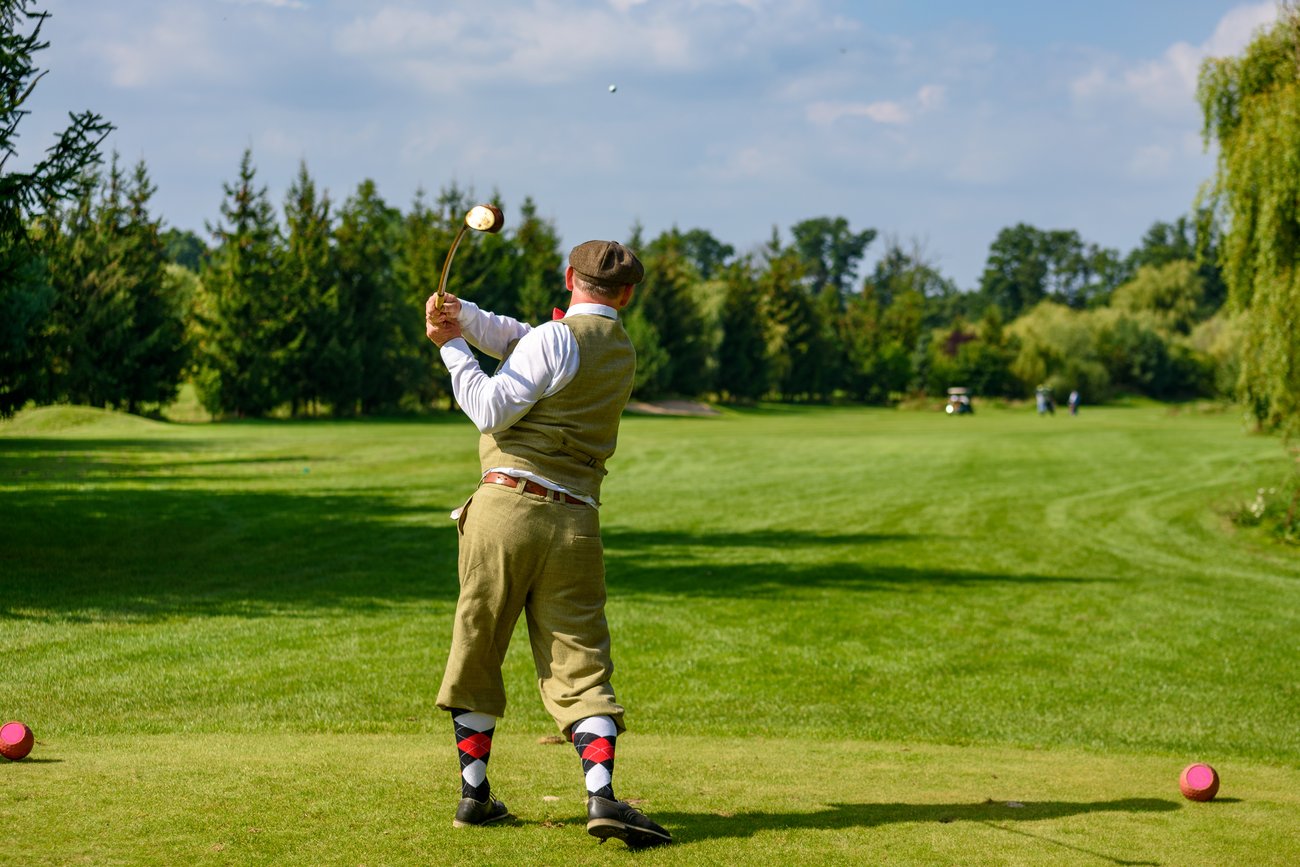
A round of golf is more than just a walk. Four to five hours outdoors, six to seven kilometers at your own pace – that's moderate endurance activity for a duration that no other sport offers so effortlessly.
It's not about golf being a cure. It's about how frequent, regular play is a lifestyle that combines exercise, social connection, and mental challenge.
— From the Study, Discussion
However, exercise alone does not explain the effect. Three further drivers are added, and for older players in particular, they may be even more important than calorie consumption.
Social Interaction
A flight round lasts four hours. Four hours of uninterrupted conversation with three other people – that practically doesn't exist anywhere else in everyday life.
Outdoor time
Daylight regulates hormone balance, vitamin D is produced, and mood stabilizes. Those who play twice a week spend 8 to 10 hours outdoors.
Mental strain
Every shot requires a decision: club, wind, lie, target. A round is a four-hour cognitive task in nature.
What the study doesn't say
Honesty is part of this magazine’s ethos: The Karolinska study is an observational study, not a randomized controlled trial. In other words, it shows a correlation, but it does not necessarily prove a causal relationship.
What we should take away from the study
On this page




 German
  English