MAGAZINE SECTION
Health & Recreation
Senior Golf Health Over 60: How to Play 18 Holes Even at 65, 70, or 75 with Sleep, Hydration, Mobility, and Smart Recovery — Without Your Score Dropping on the Back Nine. Data-Based on DGSP, ACSM, and Peer-Reviewed Sports Medicine.
Why rest saves more strokes than any new wedge from age 60 on
Senior golfers lose an average of 2–3 more strokes on the back nine than players under 40—not due to a lack of technique, but because of waning concentration, dehydrated muscles, and insufficient recovery between rounds. A Karolinska Institute study on sleep quality in senior athletes shows that just seven hours of deep sleep before a round reduces shot dispersion by up to 18 %.
In this section, you'll find evidence-based contributions on all aspects of senior golf health: sleep, hydration, mobility, stretching, injury prevention, mental training, and smart rest planning. Sources include peer-reviewed sports medicine from DGSP and the American College of Sports Medicine as well as data from my own practice.
No wellness myths, no supplement advertising — but concrete levers you can apply from the next round.
The Four Critical Levers of Senior Golf Health
Sleep—seven hours halves the hind gut
The Karolinska study on sleep quality in senior athletes is clear: Seven hours of deep sleep the night before the round halve the concentration lapse on the back nine. Senior golfers with under six hours of sleep lose an average of 2.5 strokes more on the last nine holes. Specifically: a fixed bedtime, no screens 60 minutes before sleeping, and a bedroom temperature below 18 degrees Celsius.
2. Hydration — 1.5 liters per round, drink before you feel thirsty
Even a 2% dehydration level costs about 15% of your concentration capacity starting at 60 degrees. On an 18-hole course, that’s a 6–8 km distance—at least 1.5 liters of water per round is a must. Important: drink before you feel thirsty (seniors feel thirst later) and supplement with electrolyte tablets when temperatures exceed 25 degrees. Morning coffee doesn’t count.
3. Strength training — two sessions per week against sarcopenia
Starting at age 50, we lose 1–2% of our muscle mass each year (sarcopenia). For senior golfers, this means that without strength training, swing speed decreases by 1–2 mph per year. Two 30-minute full-body sessions per week (squats, rowing, push-up variations, planks) are sufficient—no gym membership required. Standard: 8–10 repetitions, three sets, 60% of maximum strength.
4. Vitamin D and Micronutrients — The Underrated Score Factor
70% of senior golfers in Central Europe have vitamin D levels below 30 ng/ml—with measurable effects on muscle function, reaction time, and concentration. Recommended: D3 (2,000 IU per day) plus K2, magnesium (400 mg), and omega-3. Recent studies show that creatine (3–5 g) offers benefits for senior athletes—including golfers. Get a blood test from your family doctor first.
Frequently Asked Questions about Senior Golf Health
How much sleep does a senior golfer need before a round?
At least seven hours, with 1.5–2 hours of deep sleep. Those who regularly sleep less than six hours not only lose on the course but also their recovery capacity — the next round will be even worse.
Are dietary supplements really necessary?
For vitamin D in Central Europe: almost always. For magnesium: often makes sense. For „performance booster” powders: no, that's marketing. A blood test decides, not the advertising.
Strength training or more mobility exercises?
Both—but strength training takes priority after 60. Mobility maintains the swing arc, strength maintains the swing speed. Without strength training, the senior golfer will technically improve but become weaker in terms of distance.
How much recovery time do I need after 18 holes [of golf]?
24–48 hours for the musculature, 12–24 hours for the nervous system. If you want to play 18 holes two days in a row, you should approach day 1 defensively and plan for twenty minutes of mobility before day 2.
Below you will find all posts in this category — sorted by recency.

Hydration Over 60 — Four Mistakes on the Course
The sensation of thirst decreases by up to 40 percent with age. Anyone who spends four hours on the court in summer can unknowingly build up a deficit of two liters — a drop in score from the 13th hole.
Strength Training for Golfers 65+
After age 60, you lose one percent of muscle mass annually – sarcopenia. Three exercises per week, each lasting ten minutes, reverse the trend and preserve momentum strength and standing stability.
Live five years longer — through golf
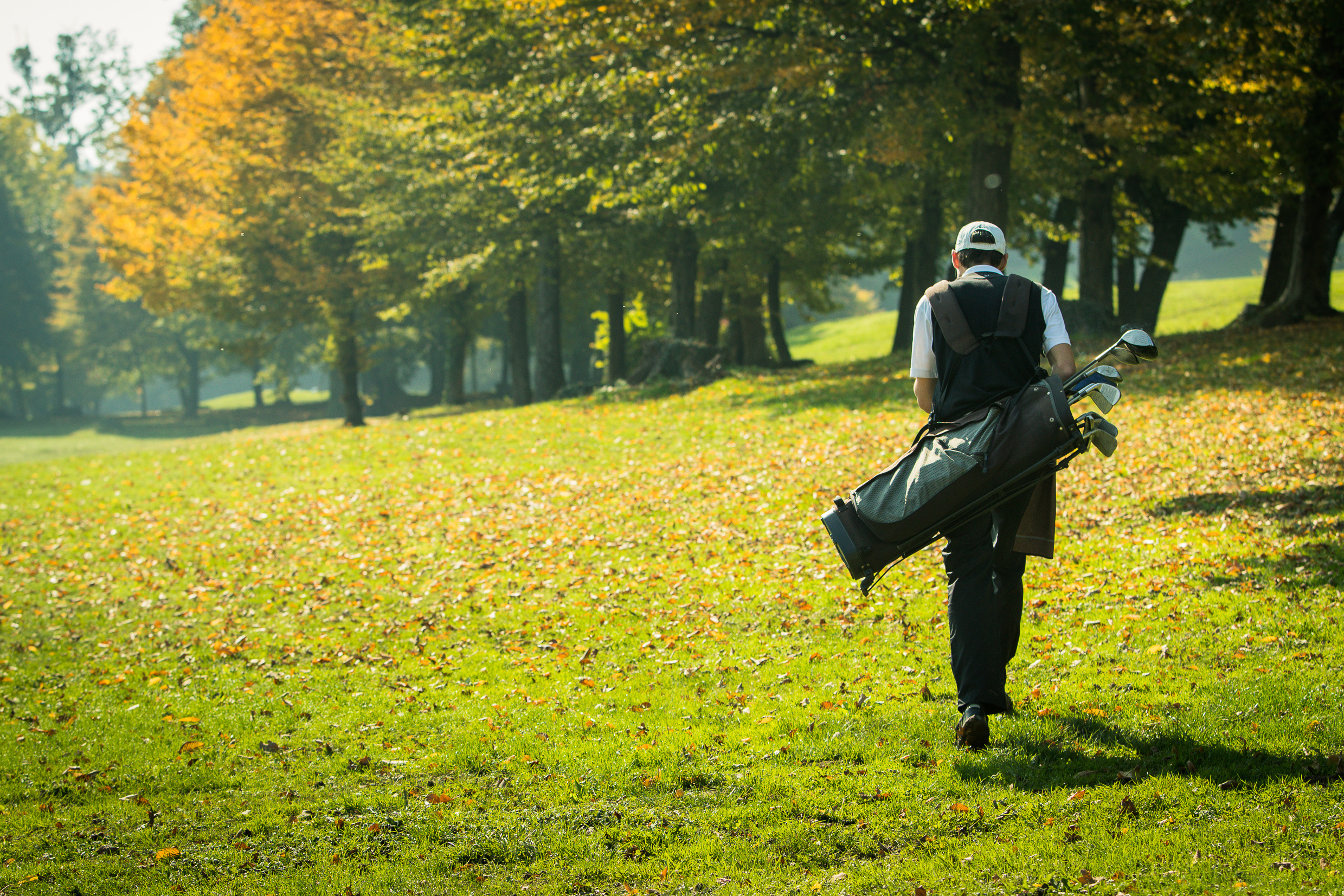
Karolinska Institute: Those who play golf regularly live, on average, five years longer than non-players. This figure comes from a study of 300,000 Swedes over 20 years.
 German
  English